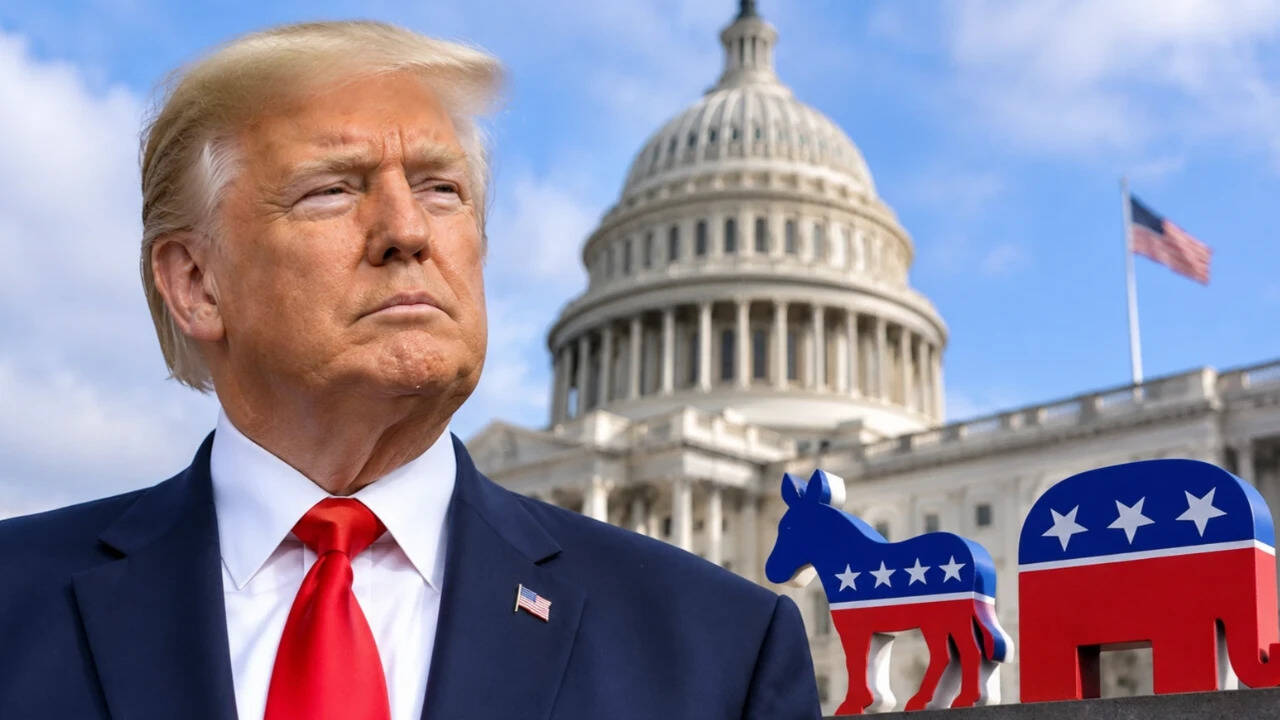
Foreign policy rarely decides American midterm elections. Voters usually care about gas prices, grocery bills, and inflation, not distant geopolitical conflicts. But the 2026 midterms broke that rule completely. Donald Trump’s military campaign against Iran, launched in early 2026, became an open wound on the American domestic economy. With gasoline climbing past four dollars a gallon and supply chains snarled by conflict in the Strait of Hormuz, voters headed to the polls facing a heavy burden.
If the administration faces a severe legislative rebuke and Democrats manage to flip the House of Representatives, everyone wants to know if the war in Iran will suddenly screech to a halt. The short answer is no. Congressional math doesn't work that way, and executive power in wartime runs deep. But a massive defeat at the ballot box still changes the political math in Washington.
The Myth of Congressional Control Over Foreign Wars
People assume that if a president loses Congress, they lose the ability to wage war. That misunderstands the American constitutional setup. Trump remains in the Oval Office regardless of who controls Capitol Hill. He retains broad, sweeping constitutional authority as commander-in-chief to direct military operations, handle diplomacy, and manage national security.
Even if Democrats secure a majority in the House and gain subpoena power or control over key committees, stopping an ongoing conflict requires passing binding legislation that can survive a presidential veto. Overriding a veto needs a two-thirds majority in both chambers. Given the partisan divide, opposition parties rarely muster those numbers.
Congress can make life difficult, though. Lawmakers control the purse strings. They can hold hearings, grill administration officials, and attempt to restrict funding for military operations. Yet cutting off funds while troops are actively engaged abroad is a political grenade most lawmakers hesitate to touch out of fear that they will be accused of abandoning service members.
Why the Iran Conflict Hit Home So Hard
To understand why these midterms carry such heavy stakes for foreign policy, look at how the conflict started. Unlike brief operations, the U.S. intervention in Iran triggered immediate economic fallout. Iranian retaliation in the Strait of Hormuz—through which a massive share of global oil and liquefied natural gas moves—choked shipping lanes. Combined with domestic tariffs, American consumers felt the pinch immediately.
Polling ahead of the election showed that a clear majority of Americans viewed the military action as a mistake. Crucially, the conflict fractured the President's own base. Blue-collar workers and traditional conservatives who backed an "America First" agenda grew exhausted by a foreign entanglement that ran counter to the promise of avoiding new overseas forever wars.
When voters head to the polls under these conditions, a congressional defeat functions as a referendum. It signals that the public rejects the economic cost of intervention.
What Changes After the Ballots Are Counted
Even if a congressional defeat doesn't force an immediate military withdrawal, political pressure alters behavior. A wounded administration heading into the final two years of a term has to calculate its next moves carefully.
If Republican candidates suffer steep losses because of high fuel prices and voter fatigue over the Middle East, lawmakers on Capitol Hill will grow increasingly vocal against further escalation. Members of Congress running for reelection in 2028 will distance themselves from costly foreign adventures. That internal party pressure often acts as a stronger brake on a president than formal legislation.
At the same time, regional dynamics keep shifting. Behind-the-scenes diplomacy led by international intermediaries points toward potential interim frameworks—such as negotiations involving the reopening of maritime trade routes in exchange for easing port blockades. If the White House wants to stanch political bleeding at home, pursuing a diplomatic off-ramp starts to look much more appealing than doubling down on a stagnant military campaign.
The outcome of the 2026 midterms won't magically rewrite Middle Eastern geopolitics overnight. But it draws a hard political boundary. When foreign policy starts costing elections at home, leaders eventually have to listen.