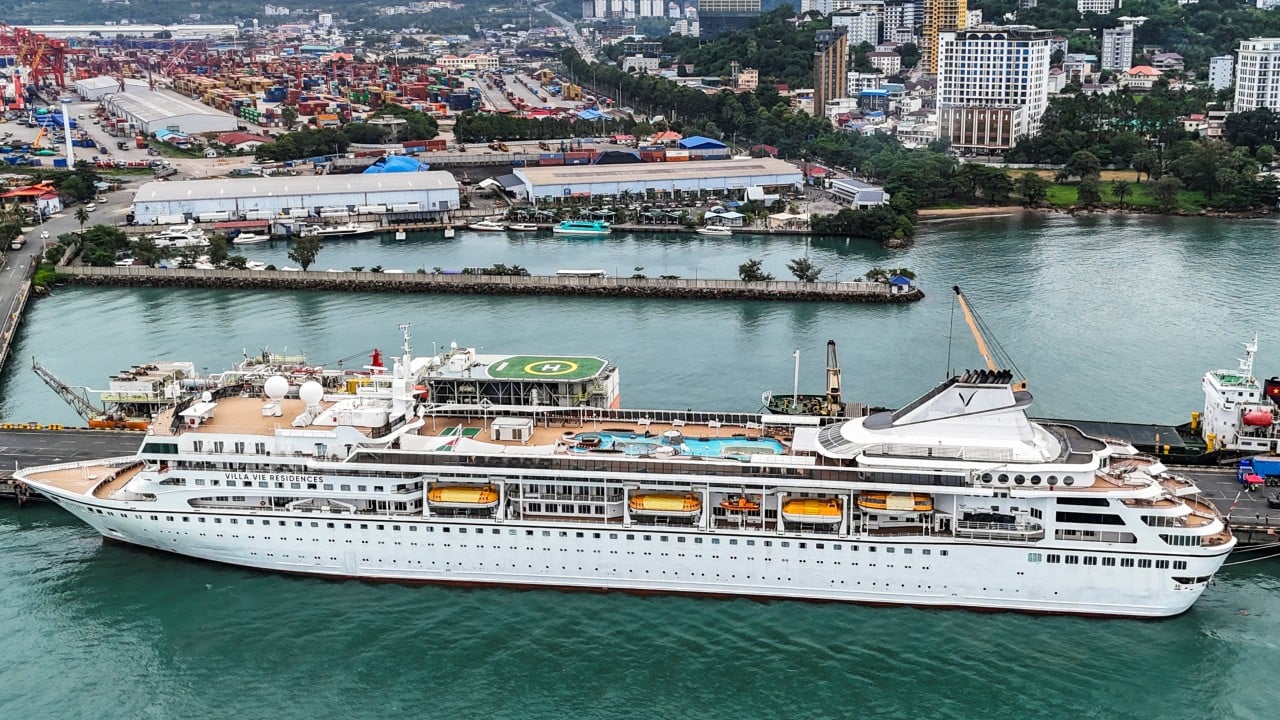
Buying a permanent home on a cruise ship sounds like an absolute dream until the fuel bill spikes over 300 percent and forces you off the gangway in Cambodia. That dream turned into an abrupt reality for roughly 200 passengers aboard the MV Odyssey, a residential cruise ship operated by Villa Vie Residences.
When the ship docked at the Cambodian port of Sihanoukville, passengers were told to pack up and disembark immediately. The reason is simple and brutal: skyrocketing fuel costs.
Let's look at what actually happened behind the scenes, why residential cruising is facing an unprecedented financial squeeze, and what this means for the future of living at sea.
When Monthly Fuel Bills Quadruple
The core business model of Villa Vie Residences relied on predictable operational expenses. When the ship initially set sail, monthly fuel expenses hovered around $1,800 per cabin. But global energy disruptions, particularly shipping routes affected by conflict and tightening supplies in parts of Asia, sent those numbers skyrocketing.
Recent operational updates show that fuel expenses per cabin surged to an estimated $6,000 to $8,000. When your overhead quadruples overnight, a continuous global voyage stops being financially viable very quickly.
Company executives announced a temporary layup to restructure and recapitalize, leaving the Odyssey docked indefinitely in the Gulf of Thailand with 156 crew members remaining onboard to maintain essential ship systems. For passengers who paid upwards of $230,000 for a suite, the promise of a never-ending floating retirement came to a crashing halt.
The Illusion of Permanent Stability at Sea
Residential cruising pitches itself as the ultimate freedom. You ditch your mortgage, sell your land-locked possessions, and sail around the globe while your home moves with you.
The fatal flaw in this model lies in fixed-price contracts versus volatile variable costs. Many residents bought into the concept assuming that their maintenance fees would cover operational spikes. They didn't count on regional geopolitical shocks closing vital maritime choke points or oil prices swinging wildly.
When you live in a traditional house and energy prices rise, you turn down the thermostat. When you live on a massive commercial passenger vessel and fuel costs quadruple, you can't just paddle the ship. You need massive capital reserves, which smaller boutique operators often struggle to maintain compared to massive legacy cruise lines like Carnival or Royal Caribbean.
What Happens to Disembarked Residents Now
Getting stranded in Sihanoukville with no confirmed departure date is a logistical nightmare. While Villa Vie Residences stated they are assisting with temporary living arrangements and managing luggage storage, passengers are suddenly faced with a jarring question: where do you go when your home is stuck at a pier?
Some travelers are booking commercial flights home to the United States and other countries, effectively ending their grand maritime experiment. Others are waiting out the 60-day restructuring window in local hotels, hoping the company secures emergency funding or fresh investment to get the engines running again.
This situation highlights the lack of consumer protection frameworks for long-term residential cruise contracts. Unlike traditional real estate purchases governed by strict property laws or standard cruise lines protected by consumer refund bonds, residential cruising occupies a messy grey area in international maritime law.
The Hard Lessons for the Future of Residential Cruising
If you're thinking about cashing out your retirement fund to buy a floating condo, pump the brakes. This incident proves that even well-marketed concepts can collapse under unexpected macroeconomic pressure.
Look closely at the financial backing of any company promising a permanent sea change. Ask tough questions about how they hedge against fuel volatility and what happens to your investment if operations suspend indefinitely.
The MV Odyssey might find its financial footing again through restructuring, but the illusion that life at sea completely shields you from global economic reality has officially sunk.
Review your contracts, keep a realistic cash buffer for unexpected emergencies, and remember that no matter how luxurious the cabin is, you are still at the mercy of the bunker fuel market.