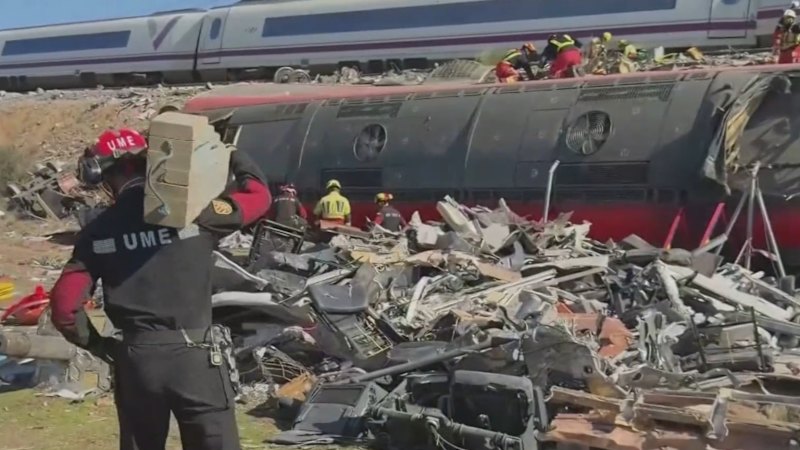
Tragedy struck far from home when two Australian citizens were confirmed among the 69 people killed in a horrific high-speed train collision in Spain. The disaster, which unfolded near the town of Urda about 130 kilometres south of Madrid, has left families shattered, nearly 200 people injured, and a nation demanding answers about systemic safety failures.
When you hear about a disaster of this magnitude, the immediate reaction is shock. But as details emerge, frustration takes over. This wasn't just a sudden act of fate. It points directly to dangerous operational missteps and infrastructure vulnerabilities that experts warn have plagued parts of the rail network.
The Horror Near Madrid
The collision involved two passenger trains traveling on a major high-speed line. More than 500 people were on board when a train operated by state-owned rail company Renfe slammed into the rear of a stationary train operated by private company Iryo. The impact force was catastrophic, obliterating carriages and trapping passengers in mangled wreckage.
Local authorities spent days working through the grim task of identifying victims. By Wednesday, officials confirmed the nationalities of all 69 deceased individuals, which included 54 Spanish citizens alongside international travellers, including the two Australians. Australia's Department of Foreign Affairs and Trade stepped in immediately to provide consular assistance to the grieving families, while withholding names for privacy reasons.
This disaster marks Europe's worst railway tragedy in over a decade. It also compounds a terrifying safety record for the region this year alone. Back in January, another deadly railway accident in Andalusia claimed 46 lives. That back-to-back catastrophe has citizens and safety advocates asking tough questions about how a modern, high-speed transit network could allow such monumental failures twice in twelve months.
Control Centre Audio Reveals Disturbing Blunders
Public anger shifted from grief to fury after media outlets published leaked audio recordings of communications between train drivers and the local control centre. Those tapes laid bare a terrifying sequence of errors.
According to the recordings, the control centre ordered the Renfe train to resume its journey while all other trains on the line were supposedly kept stationary. Why? A faulty safety system had already forced a halt across the corridor. Instead of keeping traffic locked down until technicians could verify track clearance, controllers gave a green light to move in a blind zone.
Safety systems are designed precisely to remove human error from the equation. When automated safeguards fail, the entire system relies on strict protocol and infallible communication. The released audio suggests both layers broke down simultaneously.
The Broader Safety Crisis Facing High-Speed Rail
High-speed rail is often sold as the golden standard of modern mass transit. It's fast, efficient, and heavily electrified. But speed introduces narrow margins for error. When trains operate at velocities exceeding 250 kilometres per hour, reaction times shrink to milliseconds, leaving automated signaling as the primary line of defense.
When those signals malfunction, the fallback procedures must be ironclad. Transport authorities in Spain are now facing fierce political and public pressure to overhaul maintenance schedules, upgrade aging components, and audit control room procedures. Independent rail safety experts point out that rushing to restore service after a minor fault without a manual track inspection is an unacceptable gamble.
Families of the victims, including those mourning the two Australians lost in the carnage, are left waiting for a transparent judicial inquiry. Consular support offers immediate comfort, but accountability requires structural reform, strict enforcement of backup protocols, and public disclosure of every system log leading up to the crash.
If rail operators want to retain passenger trust, they need to treat safety as an absolute non-negotiable priority rather than a metric to balance against timetable efficiency.