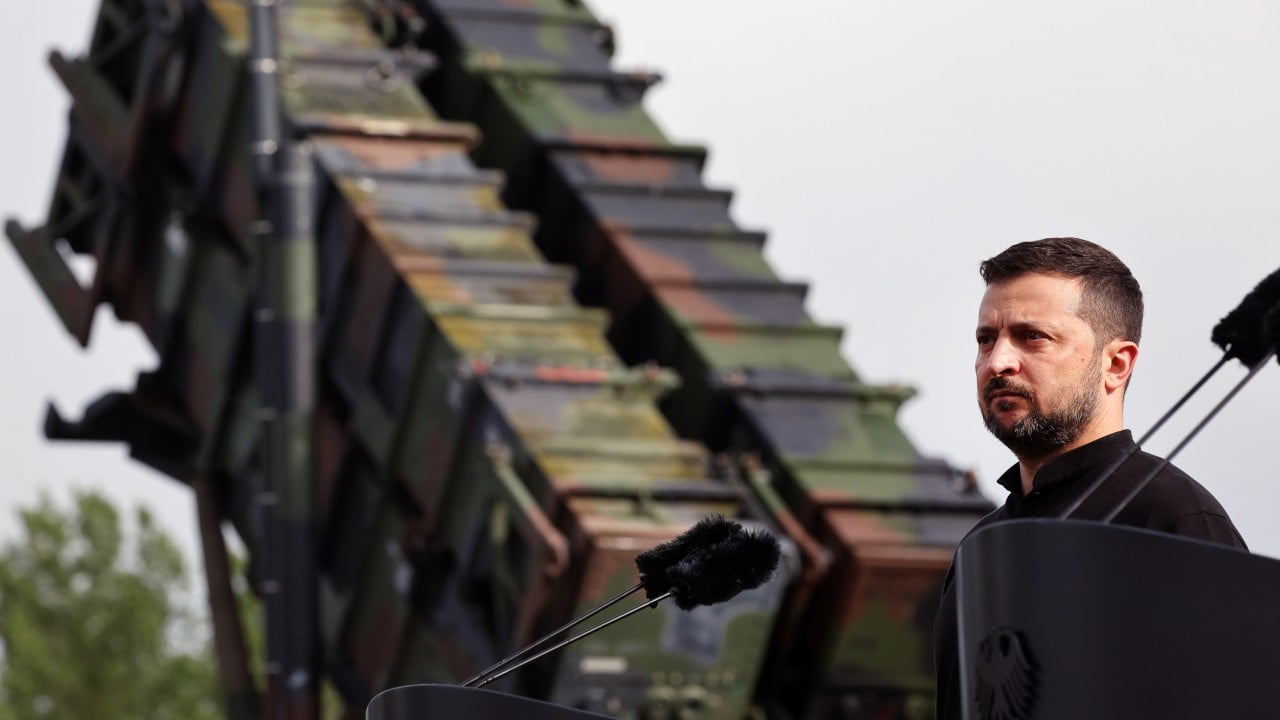
On Thursday night, President Donald Trump stood before the nation in a primetime address to warn that American voting machines are highly vulnerable to foreign attack. Waving a newly declassified cache of intelligence documents, he pointed to a CIA report about a plot to manipulate elections in Venezuela. He claimed this proof of Venezuelan interference showed that electronic voting systems are easily compromised.
But if you actually read the papers his administration just declassified, you'll find they prove the exact opposite of what he claimed. Recently making waves recently: Why Trump's Election Claims In His Latest Primetime Address Are Falling Flat.
The documents, pushed into the public eye with the help of acting Director of National Intelligence Bill Pulte and former journalist John Solomon, focus heavily on the election technology firm Smartmatic and its historical ties to Venezuela. For years, conspiracy theorists have insisted that Venezuelan actors used these machines to tilt U.S. election results. Yet, the newly declassified CIA files directly state that while Venezuela tried to exploit hypothetical flaws within its own borders, neither the Venezuelan government nor Smartmatic had the capability to manipulate elections outside Venezuela.
Let's look at what these files actually say, what they don't say, and why this old ghost is being summoned again in 2026. Additional insights on this are explored by NBC News.
The Core Contradiction in the Declassified Memo
The centerpiece of the White House release is a declassified CIA memo dating back to 2006. During this era, Venezuelan President Hugo Chávez was aggressively championing electronic voting systems.
The intelligence community was indeed watching. The memo reveals that Venezuelan officials investigated ways to exploit vulnerabilities in their own national voting systems. They wanted to see if they could manipulate electronic tallies without getting caught by international observers.
But the critical sentence in that CIA document completely undercuts the narrative of a global rigging system. The intelligence analysts concluded that "neither Smartmatic nor the Venezuelan government had the capability to manipulate the outcome of an election outside Venezuela."
The document confirms that Venezuela's reach was entirely domestic. The Venezuelan government was focused on keeping Chávez, and later Nicolás Maduro, in power within Venezuela. They had no hand in, nor the capability to touch, the localized, highly fragmented networks that run elections in the United States.
The Real Story of Smartmatic and Venezuela
To understand why these documents exist, we have to look at the messy history of Smartmatic itself. The company was founded in the early 2000s by a group of Venezuelan engineers. They won a major contract in 2004 to replace Venezuela's outdated voting machines ahead of a referendum on Hugo Chávez.
That sudden rise sparked immediate suspicion. Critics questioned how a little-known firm with no track record landed such a massive contract.
Smartmatic ran Venezuela's elections for over a decade. However, the relationship fractured permanently in 2017. During the elections for a new National Constituent Assembly, Smartmatic's system detected that Maduro's government was reporting false, heavily inflated turnout figures.
Rather than quiet down, Smartmatic executives held a press conference in London and blew the whistle on the Venezuelan regime. They announced that the official turnout numbers had been manipulated by at least one million votes. Immediately after, the company shut down its Venezuelan operations, pulled its staff out of the country, and never returned.
Since 2018, Smartmatic has had zero involvement in Venezuelan elections.
Why the US Election System is Immune to This Specific Threat
Even if we ignore the CIA's explicit conclusion, the physical architecture of American elections makes a Venezuelan-style manipulation impossible.
When people talk about the "U.S. election system," they're referring to something that doesn't actually exist. The United States has thousands of individual election systems.
Each of the 50 states sets its own rules, and within those states, individual counties choose their own voting hardware and software. This extreme decentralization is the primary defense against systemic hacking. There is no central computer, no single server, and no master switch that can be hacked to change a national outcome.
The Air Gap Defense
American voting machines are not connected to the internet. They operate on closed, localized systems. To alter the votes on these machines, an attacker would need physical access to thousands of individual devices scattered across different counties, all while evading bipartisan election workers, security cameras, and physical locks.
The Paper Trail
In the vast majority of U.S. jurisdictions, electronic voting machines generate a voter-verified paper audit trail. When a voter casts a ballot, a physical paper receipt is deposited into a secure ballot box. If anyone suspects that a machine's software has been tampered with, election officials don't just rely on the computer screen. They manually count the paper ballots to verify the electronic tally.
In 2020, every single ballot in Georgia was tallied three times—including a full manual hand recount. The paper matched the machines.
The US Footprint of Smartmatic
Conspiracy theories frequently paint Smartmatic as a dominant force in U.S. elections. The reality is far more boring.
Smartmatic technology is virtually unused in the United States. During the 2020 election, the company's only contract was with Los Angeles County, California. In L.A., Smartmatic was hired to design the physical hardware and software for custom ballot-marking devices. Crucially, the company had nothing to do with tabulating, counting, or transmitting the actual votes.
Separating True Corporate Scandals From Election Myths
None of this means Smartmatic is a saintly organization. In the real world, companies can be guilty of financial corruption without being part of a global conspiracy to steal U.S. presidencies.
Right now, Smartmatic is fighting a massive legal battle on two fronts.
On one side, the company is aggressively pursuing defamation lawsuits against media outlets and political figures who pushed false claims about its machines rigging the 2020 election. They secured a $40 million settlement from Newsmax in late 2024 and have a pending multi-billion-dollar suit against Fox News.
On the other side, Smartmatic executives are facing serious federal criminal charges in the United States.
In late 2023, federal prosecutors in Miami indicted Roger Piñate, a co-founder and former president of Smartmatic, along with other executives. The Department of Justice accused them of paying at least $1 million in bribes to the former head of the Philippines' election commission to secure a $199 million contract for the 2016 Philippine elections.
Federal prosecutors also accused Piñate of using offshore shell companies to divert funds from a Los Angeles County voting system contract into a private slush fund, and allegedly gifting a luxury Caracas home to a Venezuelan election official back in 2015.
This federal indictment is a genuine corporate bribery and money laundering scandal. It shows that the company's leadership engaged in corrupt business practices to win international contracts. But there's a massive difference between paying bribes to secure a contract in Manila and possessing the sci-fi capability to secretly alter millions of votes across the United States.
The Justice Department's own indictments show the corruption was financial, not technological.
The Real Threat is Not the Machines
By declassifying documents that show Venezuela's inability to affect external elections, the administration has inadvertently highlighted a key truth: the greatest threat to American elections isn't a secret foreign hack. It is the domestic campaign to erode trust in the system itself.
When leaders use selective declassification to imply that voting machines are easily compromised, they create a false impression of vulnerability. This rhetoric makes voters believe their voices don't matter and lays the foundation to challenge future election outcomes.
The 2006 CIA memo isn't a smoking gun of election fraud. It's a historical artifact showing that dictator Hugo Chávez wanted to control his own voters—and that U.S. intelligence knew his reach stopped at his own border.
If you want to evaluate election-security claims going forward, stop looking for shadowy foreign plots in the software. Instead, look at the physical security measures, the bipartisan oversight, and the paper trails that exist in your own local county. That's where the real security of the vote lives, and no declassified memo from twenty years ago can change that.